
In this lesson we’ll be taking a look at a thing called a dotted note, which is a note that has a small dot after it. Check out the image below for an example of what I mean…
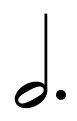
You can see that we have a half note followed by a small dot, so we call this a dotted half note.
What The Dot Means
A dot after a note is used as a very convenient way of notating a note that is longer than normal.
How much longer? The dot increases the note value of a note by 50%. For Example: Because a half note normally lasts for two beats, then a dotted half note will last for three beats.
Common Doted Note Values
| Note Value | Symbol | Meaning |
|---|---|---|
| Dotted Half Note | 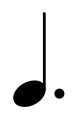 | A note that lasts for three beats. |
| Dotted Quarter Note | | A note that lasts one and a half beats. |
| Dotted Eighth Note | 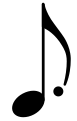 | A note that lasts for three quarters of a beat. |
I know I’m starting to sound like a broken record, but I need to mention this again for this lesson—the meaning of each note value will change depending on the time signature. (The definitions I’ve written in the table are assuming that the time signature has 4 as the bottom number).
Five Rhythm Exercises
Although all three of the dotted notes in the table are very common, for this lesson we’ll be focusing on dotted half notes and dotted quarter notes. The reason for this is that dotted eighth notes are quite a bit more advanced, so we want to get the easier ones mastered first. But don’t worry—we’ll be tackling the dreaded dotted eighth notes in a future lesson!
Let’s now look at some rhythm exercises for you to practice…
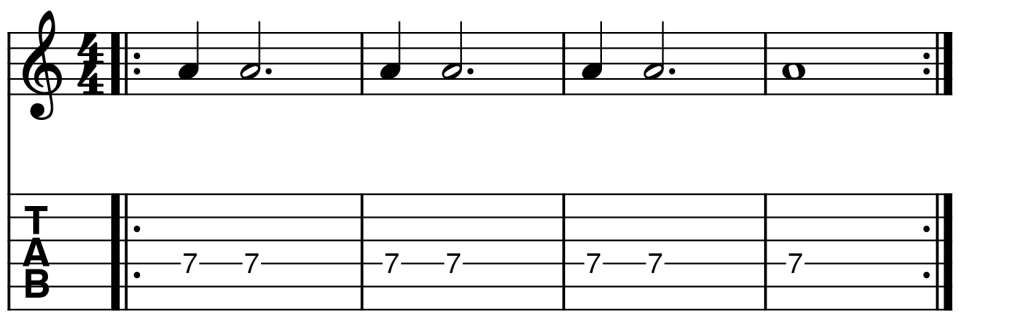
Dotted Note Exercise 1
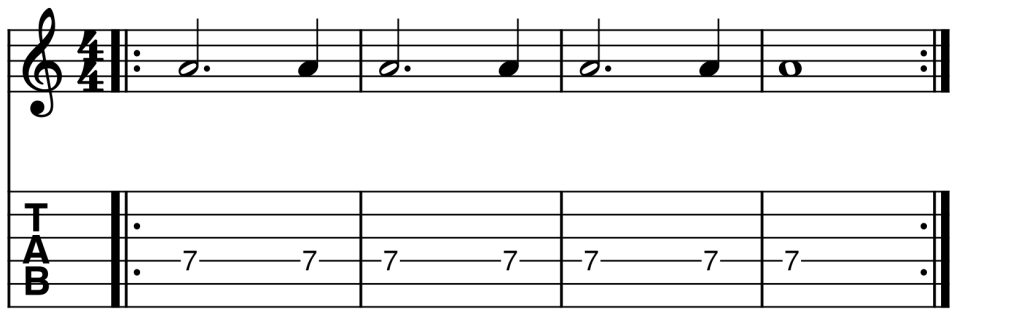
Dotted Note Exercise 2
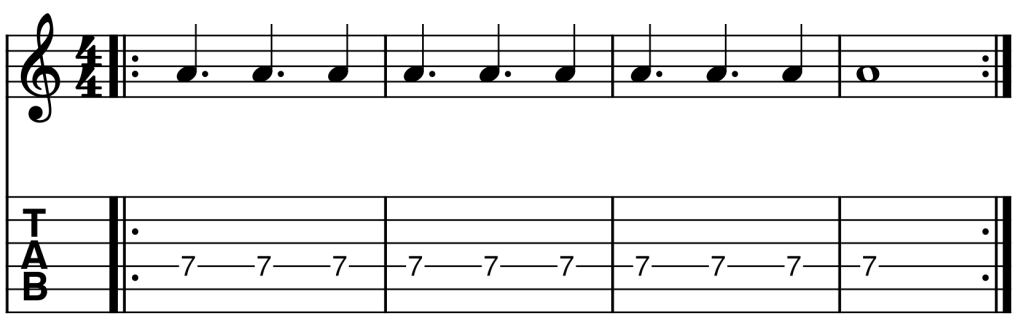
Dotted Note Exercise 3
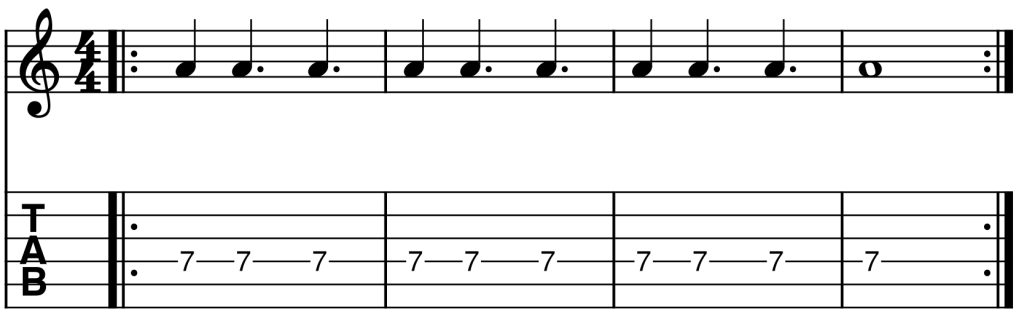
Dotted Note Exercise 4
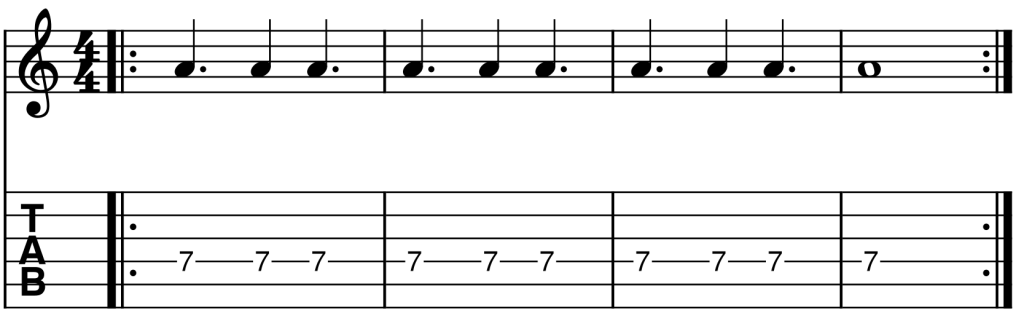
Dotted Note Exercise 5
Some Practice Tips
I recommend doing the following things, to get the most out of each exercise…
- Write the counting underneath the standard notation.
- Use a metronome and tap your foot to the beat.
- Don’t be afraid to count out aloud, if this helps you to play the exercise accurately. Eventually, you’ll want to be able to play the exercise without counting—but it can be a very useful thing to do initially.
- If you want to improve your rhythm reading skills, then sometimes practice the exercise while reading the standard notation. This will help you to associate what you’re playing with the written notation.
- When you can play the exercise very fluently as written, you can then make it more challenging by applying the rhythm of the exercise in a more musical way such as…
Practising scales using the rhythm.
Improvising using the rhythm.
Writing guitar riffs or guitar licks using the rhythm.
Of course, these are just a few general ideas. How you apply the rhythm of an exercise will depend on your current level and musical goals.
A Few Last Words
That’s all for this lesson. Spend a lot of time practising the exercises, as they will greatly increase your ability to play dotted half and dotted quarter notes.
Have fun!
Return To: Guitar Music Theory Lessons